From Inspiration to Shelf: The Systematic Journey of Apparel Concept Realization
Translating the creative concept of clothing from ideation to product is a complex and systematic process, involving everything from inspiration ignition to final production. This journey demands not only a designer's creativity and imagination but also a profound understanding of market dynamics, materials, craftsmanship, and brand positioning. Drawing from multiple academic sources and case studies, this section elaborates on transforming clothing concepts into tangible products.
-
Sourcing and Transforming Inspiration
Inspiration serves as the genesis of fashion design, emerging through diverse channels. Designers may draw from nature’s forms (e.g., spiderweb patterns, lotus leaf edges, fish scales), cultural motifs, or innovative material applications. Vibrant hues borrowed from natural palettes can merge seamlessly with thematic narratives in designs. Concurrently, market research, fashion shows, and exhibitions offer insights into emerging trends and consumer preferences, guiding design refinements.

-
Conceptualization and Ideation
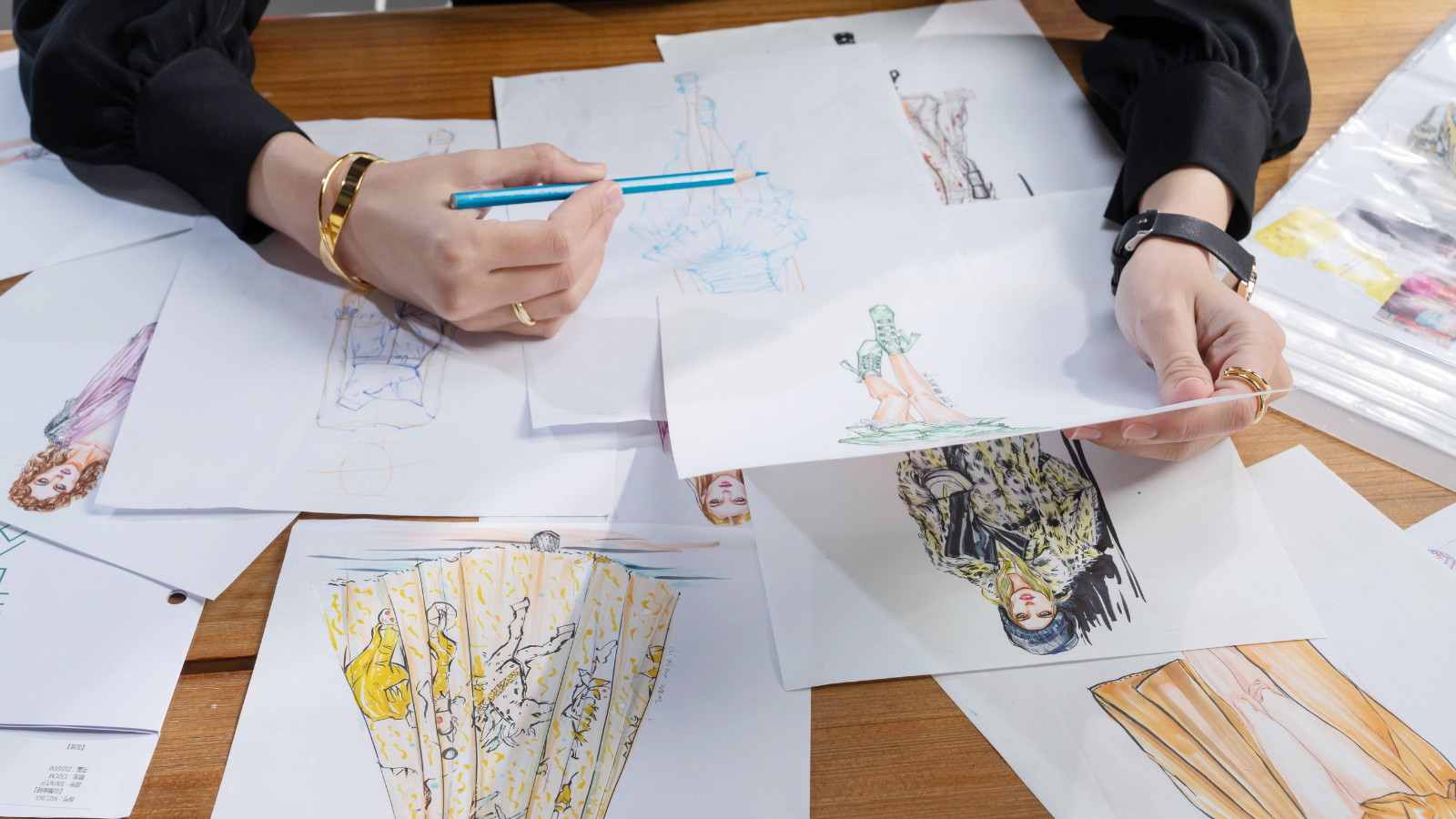
Post-inspiration, designers crystallize ideas through sketches, keywords, and descriptive notes. Techniques like combinatorial thinking or forced connections fuse disparate elements to spark innovation. Brainstorming and mind mapping further distill concepts into coherent themes, ensuring alignment with target audiences and stylistic goals.
-
Prototyping and Sampling
Prototyping bridges vision and reality via three sample types:
-
Prototype/Fitting Samples: Test ergonomics and functionality.
-
Sales Samples: Showcase design integrity to buyers.
-
Production Samples: Guide mass manufacturing consistency.
Critical considerations include fabric selection, cutting techniques, and stitching precision to ensure feasibility.
-
Market Research and Feasibility Analysis
Post-sampling, market viability assessments involve:
- Professional consumer behavior studies.
- Competitor trend analysis.
- Pre-sales/crowdfunding trials to gauge demand.
Data-driven insights determine whether to proceed, pivot, or halt development.
-
Production and Supply Chain Management
Validated designs enter production via collaborative workflows with cutters, seamstresses, and fabric suppliers. Clear technical specifications and supplier vetting ensure quality control and timely delivery.
-
Brand Positioning and Marketing
Post-production strategies include:
-
Brand Positioning: Crafting unique narratives that resonate with target demographics.
-
Marketing Tactics: Leveraging social media, influencer livestreams, and fashion expos for visibility.
-
Iterative Optimization
Design evolution continues post-launch via:
- Customer feedback integration.
- Sales analytics-driven refinements.
- Limited editions or collaborations to sustain innovation.
Conclusion
Transforming clothing concepts into products is a multidimensional odyssey spanning inspiration, prototyping, market validation, and brand storytelling. Success hinges on a designer's acuity, expertise, and adaptability. Continuous learning fuels creativity, propelling the fashion industry forward.
From Craftsmanship to Artistry: Principles of Value Leapfrogging in Apparel Luxury Transformation
Bamboo Fiber's Five Golden Sectors: Entry into the $8.4 Billion Market by 2030
Related Article