Navigating Global Certifications: The Backbone of Trust in Infant Apparel
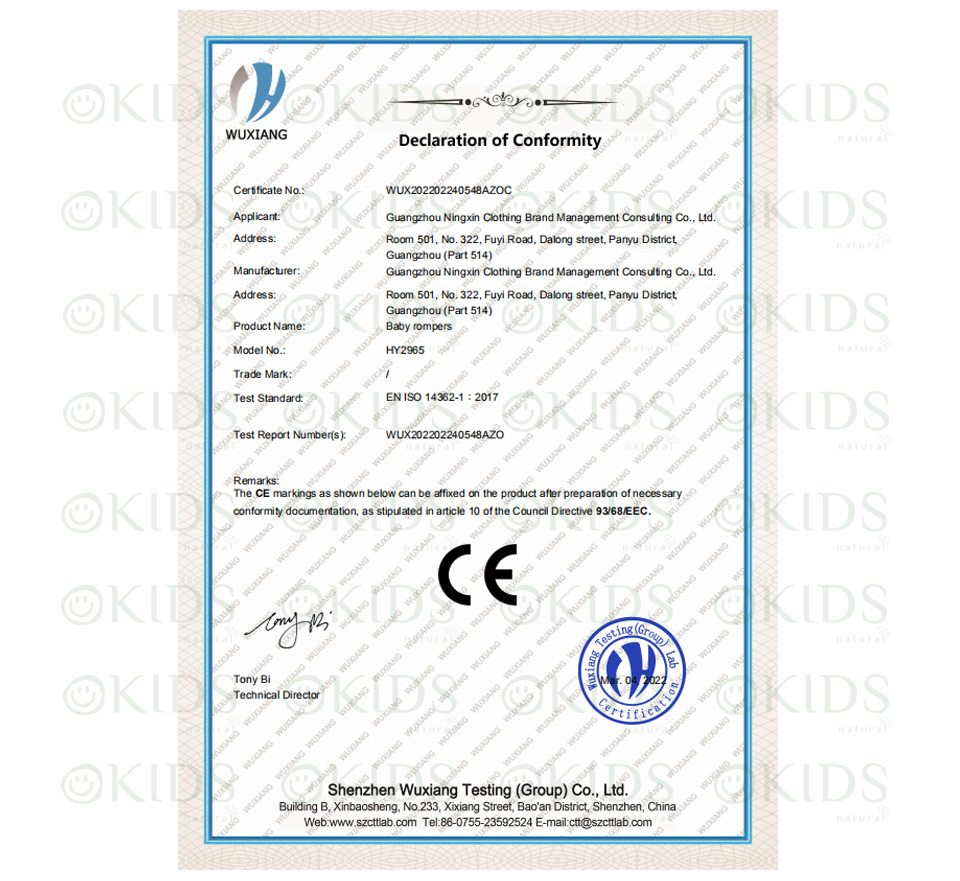
1. CE Marking (EU Compliance)
Essential for the European market, CE certification verifies that products meet EU health, safety, and environmental directives. For infant wear, this includes adherence to EN 14682 (stringent rules on cords and drawstrings) and EN 71-3 (limits on heavy metals like lead and cadmium). Products undergo physical, chemical, and flammability testing to prevent choking hazards, skin irritation, and other risks.
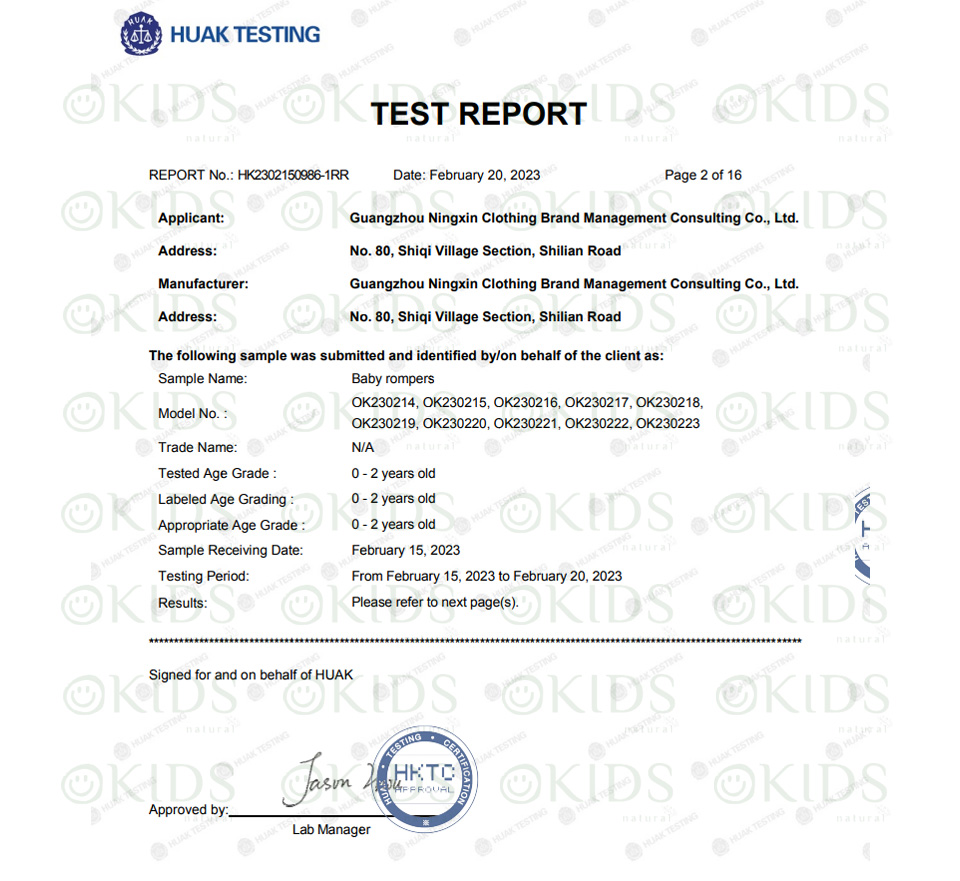
2. CPC & CPSC (US Market Access)
The Children's Product Certificate (CPC) is mandatory for all infant apparel entering the U.S. under the Consumer Product Safety Improvement Act (CPSIA). It requires:
• Lead content ≤100 ppm and phthalates ≤0.1%.
• Compliance with flammability standards (16 CFR 1610 for general apparel; 16 CFR 1615/1616 for sleepwear).
• Small parts testing to prevent choking hazards (16 CFR 1501).
The Consumer Product Safety Commission (CPSC) oversees enforcement, with third-party testing by CPSC-accredited labs required for certification.
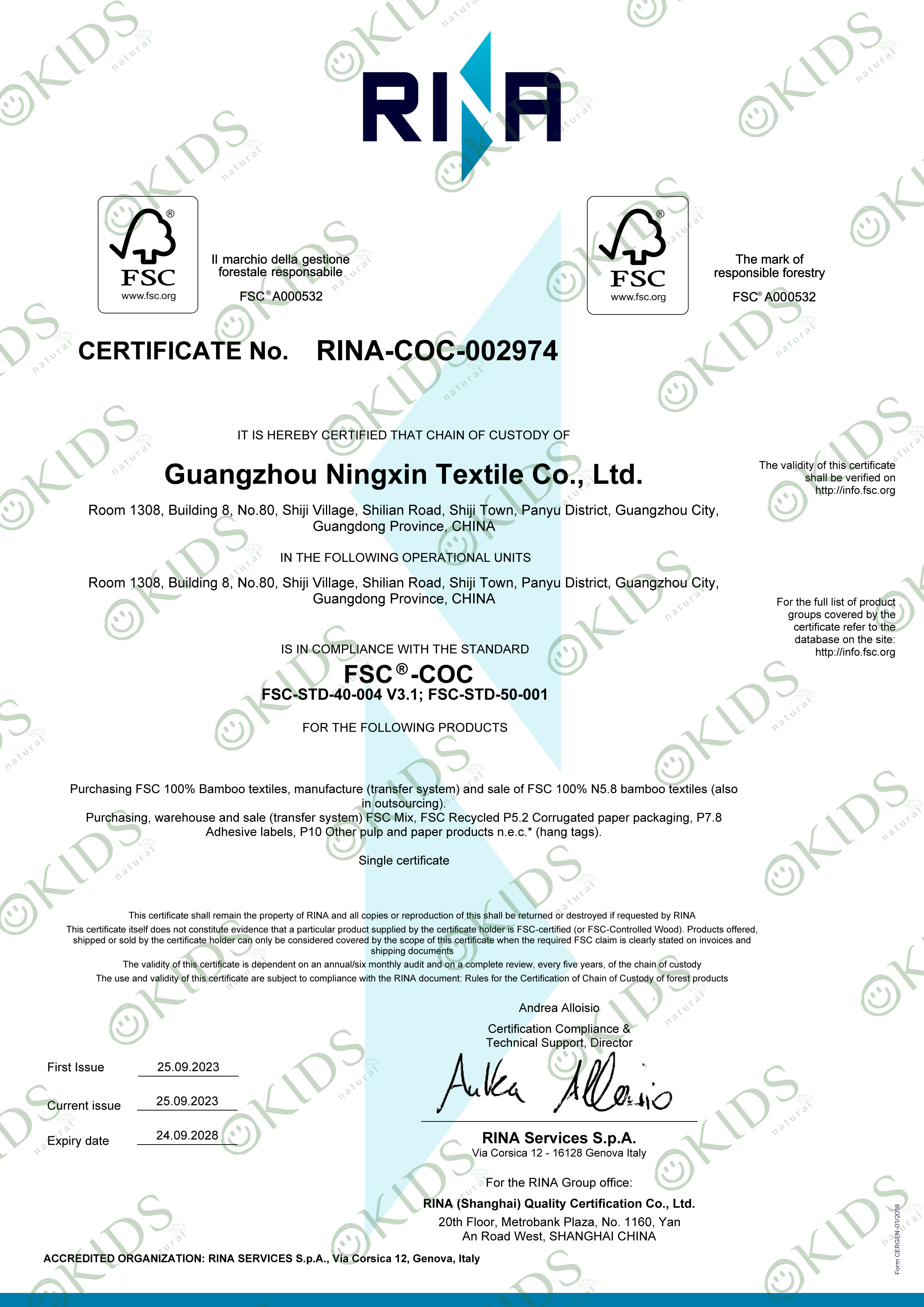
3. FSC Certification (Sustainable Sourcing)
Critical for brands using wood-derived fabrics (e.g., viscose/rayon), the Forest Stewardship Council (FSC) ensures materials originate from responsibly managed forests. This traceability addresses EU deforestation regulations and appeals to eco-conscious buyers.
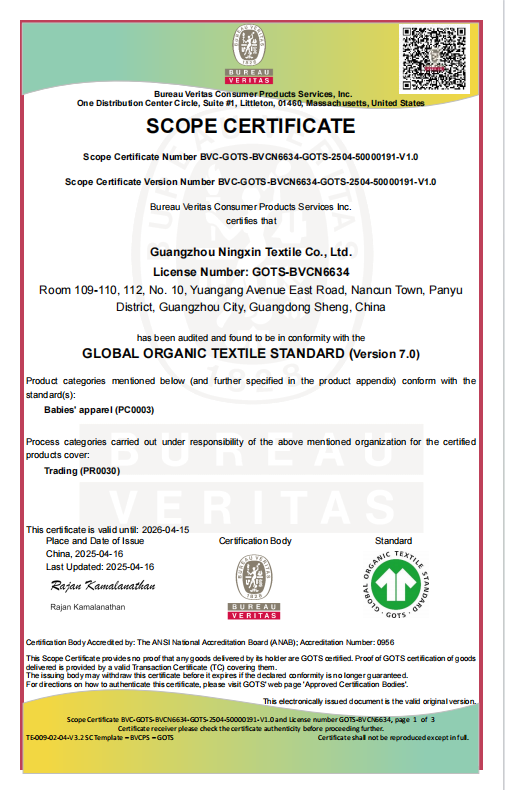
4. GOTS (Gold Standard for Organic Textiles)
The Global Organic Textile Standard (GOTS) covers organic fibers (≥70% required; ≥95% for "organic" labeling) and mandates:
• Chemical-free farming (non-GMO seeds, no synthetic pesticides).
• Eco-friendly processing (restricting heavy metals, formaldehyde, and AZO dyes).
• Social accountability (fair wages, safe working conditions).
GOTS-certified fabrics are 99% antimicrobial and ideal for sensitive infant skin.
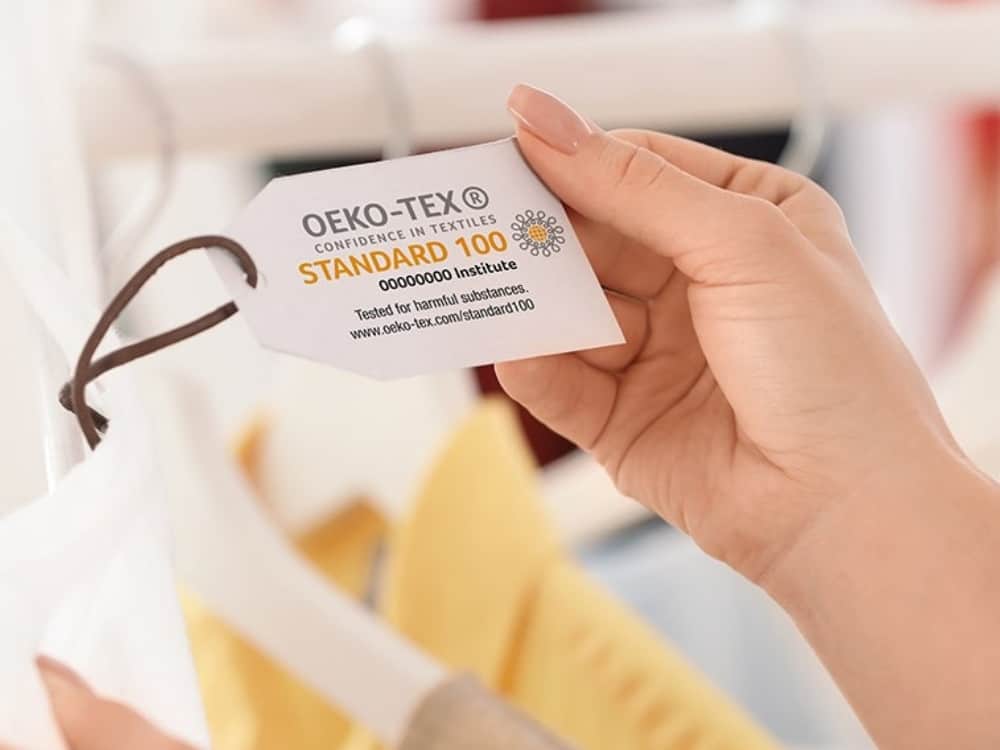
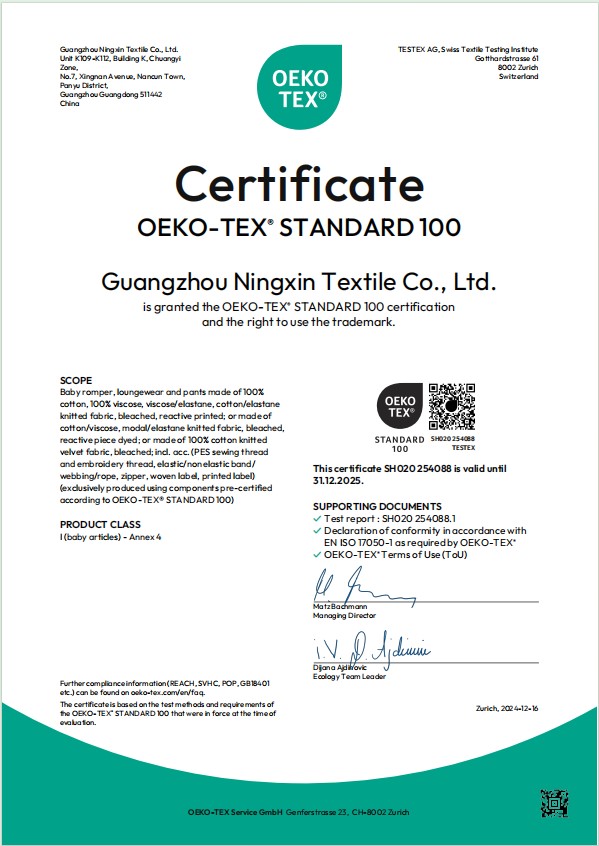
5. OEKO-TEX STANDARD 100 (Chemical Safety)
This globally recognized label tests for 300+ harmful substances (e.g., PFAS, formaldehyde). For infant products, Class I (Product Level I) applies—the strictest tier, requiring saliva and sweat resistance simulations to ensure safety during mouthing.
Why Certifications Matter Beyond Compliance
• Market Access: Certifications like CE and CPC are non-negotiable for EU/U.S. market entry. Non-compliance risks recalls, fines (up to $150,000 per violation), and shipment seizures.
• Consumer Trust: 73% of B2B buyers prioritize suppliers with GOTS/OEKO-TEX for their proven safety and sustainability.
• Supply Chain Resilience: Certifications like FSC and GOTS enforce traceability, reducing regulatory bottlenecks and aligning with ESG goals.
For industry players, integrating these standards isn't just about legality—it's about leading with integrity in a market where safety and sustainability are the ultimate currencies.
If you want to know more, please click here and leave us a message.
High vs. Low MOQ: How to Choose the Right Manufacturer for Your Apparel Brand
Baby Onesie: The Perfect Choice for Your Little One
Related Article